
On this page
- Start with the question that stops the purchase
- Build an evidence file before rewriting claims
- Audit a hypothetical kettle against real objections
- Make materials and compatibility impossible to misread
- Give every product photograph a decision to support
- Treat a variant change as a new product promise
- Bring shipping and returns into the buying decision
- Use a copyable worksheet to brief the repair
- Check whether clarity improved, not just whether clicks rose
- Practical questions from product teams
- Should every specification appear beside the purchase button?
- What if the supplier cannot confirm a material?
- Can FAQs replace a better description and gallery?
- Should we publish a limitation that could lose a sale?
- Source notes and the next useful action
A buyer is looking at an electric kettle on your store during a lunch break. The price fits their budget. The finish looks right. But they cannot tell whether the inside is entirely metal, whether the cord reaches their kitchen socket, or whether the kettle can heat milk. They open another tab instead of choosing a colour.
The useful fix is not a longer sales pitch. Put a verified answer beside the decision it affects, show evidence where words are insufficient, and state restrictions before the buyer discovers them after delivery.
For Indian businesses selling physical products online, this is a product merchandising problem: does the page help someone decide whether this exact item suits their circumstances? Start by auditing buyer doubts across materials, dimensions, compatibility, photographs, variants, shipping and returns. Search visibility matters, but bringing more people to an unresolved question does not answer it.
Start with the question that stops the purchase
Review a product page as a buyer with a specific constraint, not as someone who already knows the catalogue. “Is this good quality?” is too broad to audit. “Does water touch plastic inside this kettle?” gives you something observable to check.
Gather questions from customer support, product enquiries, return reasons, reviews and conversations with sales or fulfilment teams. Treat these as signals, not a representative survey. A vocal customer may reveal an important ambiguity without proving how common it is.
Separate doubts into practical categories:
- Fit: Will it fit my space, body, equipment or intended use?
- Identity: What exactly arrives, including material, colour, quantity and accessories?
- Risk: What happens if delivery is delayed, the item is damaged or it is unsuitable?
Then inspect the page on a phone. Can someone answer the important questions without interpreting a lifestyle photograph, opening unrelated policy pages or contacting support?
An answer that exists somewhere is not necessarily usable. Record whether it is missing, vague, contradicted elsewhere or simply buried. Those diagnoses lead to different repairs: adding a specification, checking a claim, reconciling information or moving existing content.
Build an evidence file before rewriting claims
Assign a source to every factual statement you intend to publish. Useful sources include the current product manual, approved supplier specifications, packaging, direct inspection and controlled photographs of the actual item. Record the relevant model and variant so that evidence from an older version does not silently travel into new copy.
“Premium construction” cannot answer a material question. “Stainless-steel inner chamber” is more useful, but still incomplete if the lid underside, water-level window or filter uses another material. Inspect the parts that matter to the buyer’s concern.
When sources conflict, pause the claim. Ask the product owner or supplier to resolve it rather than choosing the most attractive wording. Keep the uncertainty visible internally until someone accountable signs it off.
Shopify’s product details guidance explains product information fields and how details are managed within its platform. It is useful implementation guidance for merchants using Shopify. It does not establish the truth of a supplier’s claims or prescribe the audit process in this article.
Claims involving safety, certifications, health or legal obligations need appropriate specialist review. A marketer can improve clarity; they should not manufacture technical assurance from an incomplete specification sheet.
Audit a hypothetical kettle against real objections
Hypothetical example: Consider a fictional electric kettle called the Everyday Steel Kettle. This example concerns a real product category, but the model, specifications and buyer situations below are illustrative, not an Adservex client result or a product endorsement.
Assume the verified product documents and inspection establish that it heats water only, has a stainless-steel chamber, includes a plastic component beneath the lid and comes with a detachable powered base. The measured external dimensions and cord length would need to be added from the actual item before publication.
Its existing page says: “Premium steel kettle for every kitchen. Fast heating. Easy returns.” The photographs show the exterior against a kitchen background. A colour selector sits above the purchase button.
That page creates several avoidable gaps. “Steel” may suggest an entirely metal interior. “Every kitchen” ignores socket placement and available space. “Easy returns” says nothing about the buyer’s reason for returning it.
Use a compact audit to turn those gaps into publishing decisions:
| Buyer doubt | Evidence to verify | Page repair |
|---|---|---|
| Does water contact plastic? | Inspect chamber, lid, filter and window | Name relevant materials; show interior |
| Can I heat milk? | Current model’s instructions | State water-only use near key features |
| Will it fit my counter? | Measure assembled kettle and base | Add labelled dimensions and opening clearance |
| Will the cable reach? | Measure usable cord; inspect exit point | State length and show base orientation |
| Does each colour have the same specification? | Compare variant records and stock | Update images and details with selection |
| Can I return it if unsuitable? | Current approved returns policy | Explain applicable conditions without overpromising |
The objective is not to eliminate every objection. If the buyer wants to heat milk, this kettle is unsuitable. Helping them recognise that is better merchandising than persuading them through an ambiguous claim.
Make materials and compatibility impossible to misread
Organise specifications around decisions rather than supplier terminology. Buyers should not need to infer functional limits from a model code or an unfamiliar component name.
For the hypothetical kettle, a useful statement would be: “For heating water only; do not use for milk or cooking. Stainless-steel chamber with a plastic component beneath the lid.” Publish that wording only after checking that it accurately describes the actual model.
Materials should distinguish the exterior, interior and contact surfaces where relevant. Avoid turning a partial fact into a whole-product claim. A steel body does not automatically establish that every surface touching water is steel.
Dimensions need similar precision. Identify whether measurements cover the product alone, its base, packaging or the space required during use. A kettle that fits beneath a shelf when closed may still need additional clearance to open its lid.
Use labelled units consistently, and pair dimensions with a diagram. Do not publish a capacity as though it were an external size. Do not rely on a nearby mug as a measurement reference.
For electrical products, verify the rated supply information, plug configuration and intended operating conditions against approved documentation. Show the plug where it helps identification. Do not casually recommend adapters or extensions to solve a compatibility objection; have a qualified professional review electrical guidance when necessary.
Give every product photograph a decision to support
A gallery should work like an inspection, not a sequence of attractive poses. Keep a clear overall view, then add photographs that resolve the doubts identified in the audit.
For the hypothetical kettle, useful views include the open lid, interior, pouring spout, handle clearance, powered base, cord exit and included components. A labelled dimension image can explain external size more reliably than a styled counter scene.
Show the actual product version being sold. If a photograph contains cups, a tray or other styling accessories, make clear which items are included. Otherwise, a lifestyle image can accidentally become a promise about the package contents.
Use close-ups where material boundaries or controls matter. Avoid retouching that hides seams, changes finishes or makes a translucent component appear solid. Colour can vary across screens, so do not describe photography as a guarantee of an exact visual match.
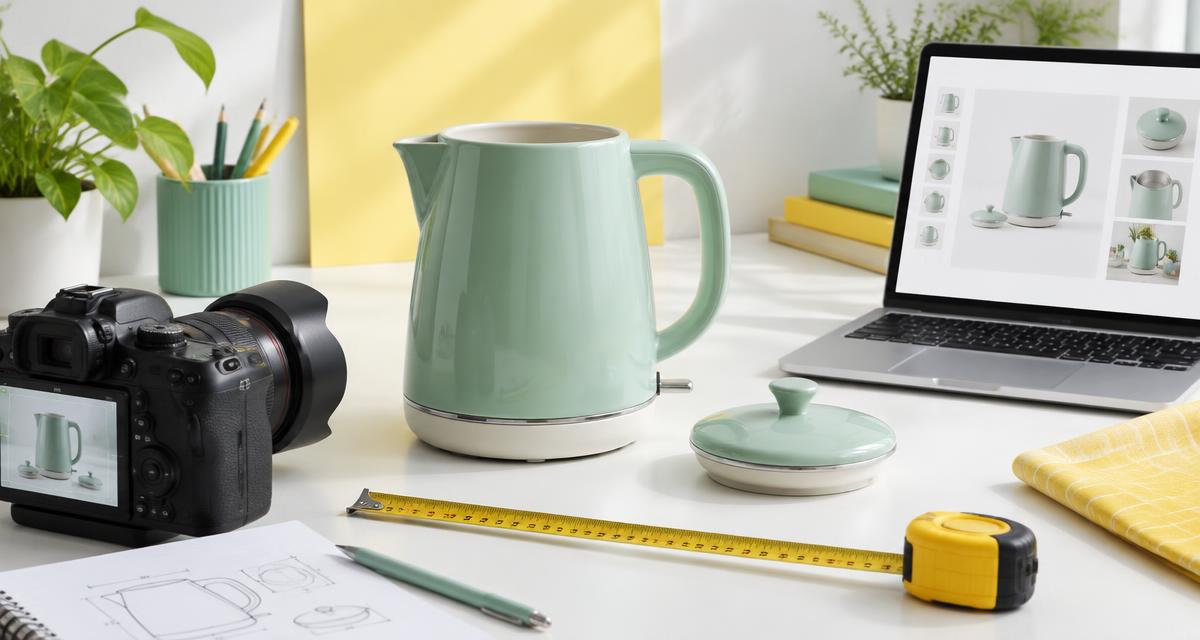
Generated photographs are illustrations, not client proof or reliable evidence of product construction. They should not stand in for inspection photographs when buyers are evaluating dimensions, components or finish.
There is a trade-off between completeness and gallery overload. Put decision-critical views before repetitive beauty shots. Check that labels remain legible on mobile, and provide the essential specification in text as well as inside the image.
Treat a variant change as a new product promise
A colour or size selector can change more than appearance. Capacity, material, accessories, dimensions, stock availability and dispatch arrangements may differ across variants. Audit the selected state, not just the default page.
Select every available option and check the name, photograph, price, specification, availability message and cart line. They should describe the same item. A buyer should not choose a dark finish while still seeing the light variant’s gallery and delivery message.
If variants differ only in colour, say so only after verification. If they differ functionally, show the difference beside the selector rather than hiding it in a general description.
For the hypothetical kettle, do not assume another capacity uses the same base, cord or internal components. Each claim needs evidence for the version it describes.
Make unavailable choices understandable. Explain whether an option is temporarily unavailable or no longer offered when that information is known. Avoid a silent substitution to another variant. The cart should repeat the chosen model and attributes clearly enough for the buyer to catch a mistake before payment.
Bring shipping and returns into the buying decision
Shipping information should answer what can be known at the product stage without pretending to know what cannot. Distinguish dispatch from delivery. If destination affects serviceability or timing, let buyers check their PIN code where your operations can support an accurate response.
State whether an estimate depends on order time, stock location or made-to-order preparation when those conditions apply. If an exact delivery date is unavailable, explain when a firmer estimate will appear. A vague “fast delivery” badge contributes little to planning.
Returns need a similarly specific summary. Buyers may mean damaged on arrival, wrong item, functional fault or simply unsuitable for their needs. These are different situations; do not flatten them into “hassle-free returns.”
Summarise the applicable conditions in plain language and link to your existing full policy. Explain how to start a request and what information the team needs. Ensure the summary matches operational practice, and obtain professional review where policy wording has legal implications.
For the hypothetical kettle, a buyer hoping to test it with milk should see the water-only restriction before purchase, not first during a return discussion.
If product information is clear but buyers encounter unexpected costs or restrictions later, continue with a checkout abandonment audit. Product-page uncertainty and checkout friction overlap, but they need separate diagnosis.
Use a copyable worksheet to brief the repair
Do not begin by shopping for a reviews app, chatbot or product-page builder. First establish which question is unanswered and why. An app cannot verify a material, reconcile conflicting specifications or make an unworkable delivery promise reliable.
Copy this worksheet for each important product or product family:
- Product and exact variant:
- Buyer’s intended use or constraint:
- Doubt in the buyer’s own words:
- Where the doubt appeared: Support, enquiry, review, return record or page inspection.
- Current page answer and location:
- Diagnosis: Missing, vague, contradictory, buried or inaccurate.
- Verified answer and evidence source: Include model/version and verification date.
- Limits or exclusions that must remain visible:
- Required proof asset: Photograph, diagram, specification or policy clarification.
- Placement: Gallery, selector, key details, delivery area or policy summary.
- Responsible owner and reviewer:
- Acceptance check: What should a buyer now be able to determine?
- Follow-up signal: Which question, mismatch or operational issue will be reviewed?
Prioritise doubts that could cause an unsuitable purchase, materially affect fit or contradict the selected item. Then address missing evidence and discoverability. Cosmetic polish comes after those repairs.
Tools become relevant when the diagnosis reveals a repeated implementation problem: inconsistent variant data, manual serviceability checks or specifications that cannot be maintained across a catalogue. Start with the smallest change that can be kept accurate.
Check whether clarity improved, not just whether clicks rose
Before publishing, ask someone unfamiliar with the product to answer realistic questions from the page. Can they identify permitted use, relevant materials, external size, included items and applicable delivery or return conditions? Note where they hesitate or infer an answer that the page does not actually support.
After publishing, review enquiry themes, return reasons and variant mistakes alongside commercial performance. Fewer material questions may indicate better clarity, but could also reflect lower traffic. Compare enquiry counts with relevant product-page visits and keep the definitions consistent.
Do not credit the copy alone if price, promotions, stock or traffic sources changed at the same time. For low-traffic products, a structured usability check and careful review of support conversations may be more useful than declaring a conversion winner from sparse data.
Record changes and unresolved issues in a weekly marketing dashboard for founders. Keep the product-level evidence available rather than compressing every outcome into a single headline metric.
Adservex’s ecommerce SEO services in India offer a related discussion for businesses assessing their wider store. This audit remains a merchandising exercise, not a ranking promise. If your team needs help defining the review scope, contact Adservex with representative pages and unresolved buyer questions, without sharing customer personal information.
Practical questions from product teams
Should every specification appear beside the purchase button?
No. Put suitability limits and decision-critical facts close to the purchase controls, then organise detailed specifications in a clearly labelled section. The right balance depends on the product. A long technical block can bury the very restriction a buyer needs to notice. Check the mobile layout rather than judging only the desktop page.
What if the supplier cannot confirm a material?
Do not replace the missing fact with “premium” or infer it from appearance. Request model-specific documentation or arrange an appropriate inspection. Remove unsupported material claims while the issue is unresolved. If the uncertainty concerns safe use or a core suitability requirement, escalate the listing decision to the responsible product team.
Can FAQs replace a better description and gallery?
No. FAQs are useful for residual questions, but primary decisions belong in the main buying experience. Water-only use should appear with product suitability; variant differences should appear near selection. Repeating an essential restriction in an FAQ can help, but requiring buyers to find it there is poor information placement.
Should we publish a limitation that could lose a sale?
Yes, when it determines whether the item suits the buyer. Explain the limitation precisely rather than defensively. A kettle restricted to water is not defective because someone wants to heat milk; it is the wrong choice for that use. If you suggest an alternative, verify that alternative’s suitability instead of moving the same unanswered question elsewhere.
Source notes and the next useful action
The official Shopify product details documentation supports the narrow implementation topic of managing product information within Shopify. It does not validate the hypothetical kettle specifications, establish merchandising outcomes or endorse this audit method.
The workflow here is editorial guidance. Product facts must come from evidence for the item being sold; shipping and returns statements must match approved policies and actual operations.
Start with a product that attracts unresolved suitability questions. Complete the worksheet, verify the answers and repair the page before adding more persuasion. A stronger product page does not merely make the item sound desirable. It makes the buyer’s decision easier to get right.
Published by Adservex. Examples illustrate decisions, not guaranteed outcomes. Platform requirements can change.